
MarketKing's "Single Product Multiple Vendors" module allows multiple vendors to sell the same product. Vendors can easily add existing marketplace products to their own store with a single click.
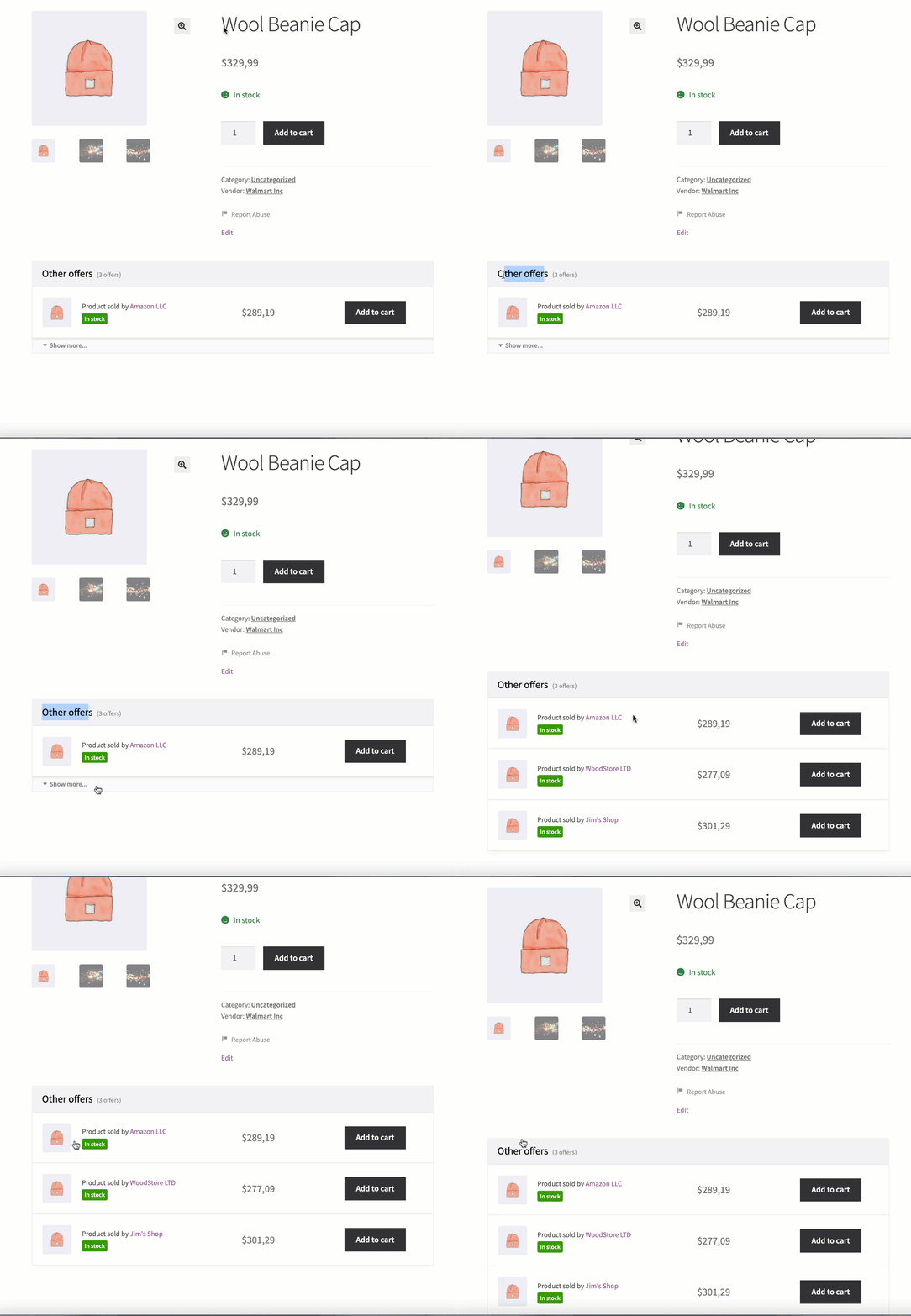
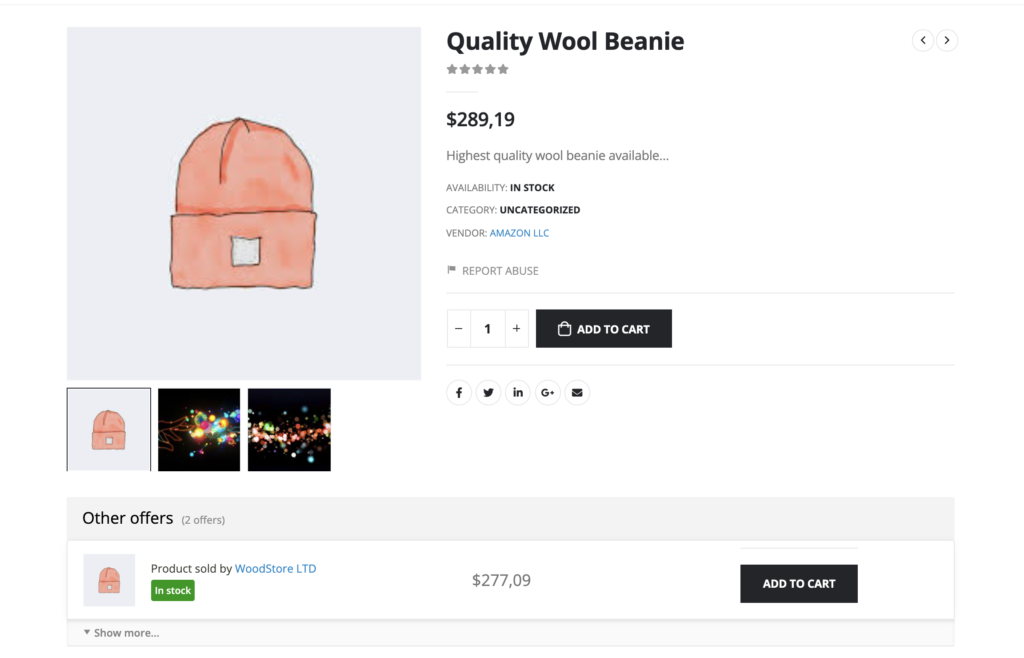
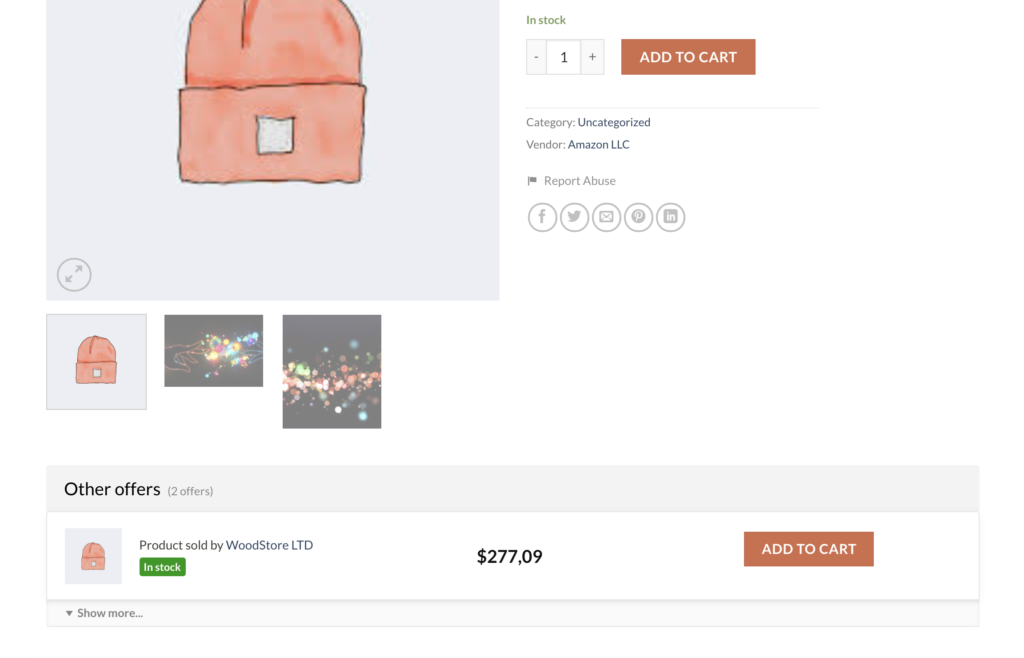
The offers design is adaptable and works with any WooCommerce theme. Here are a few examples of how it looks with some popular themes:
Enabling the Module
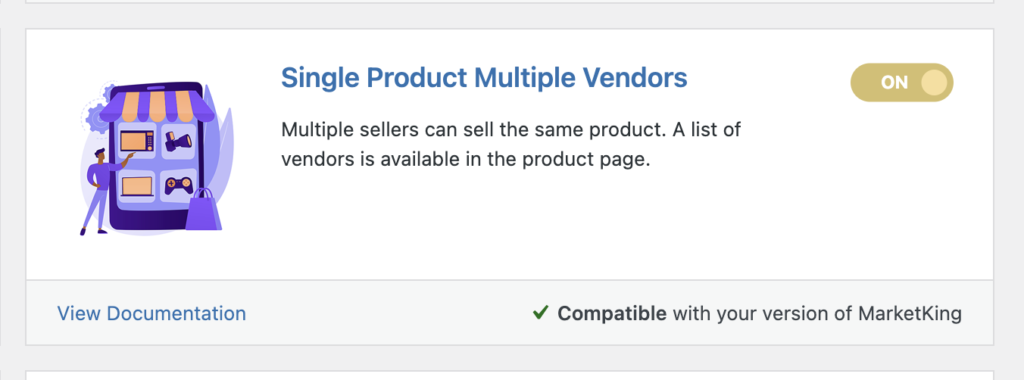
The module can be enabled via MarketKing -> Modules:
Adding Products
When this module is active, vendors will see an "Add product to my store" button on other vendors' products.
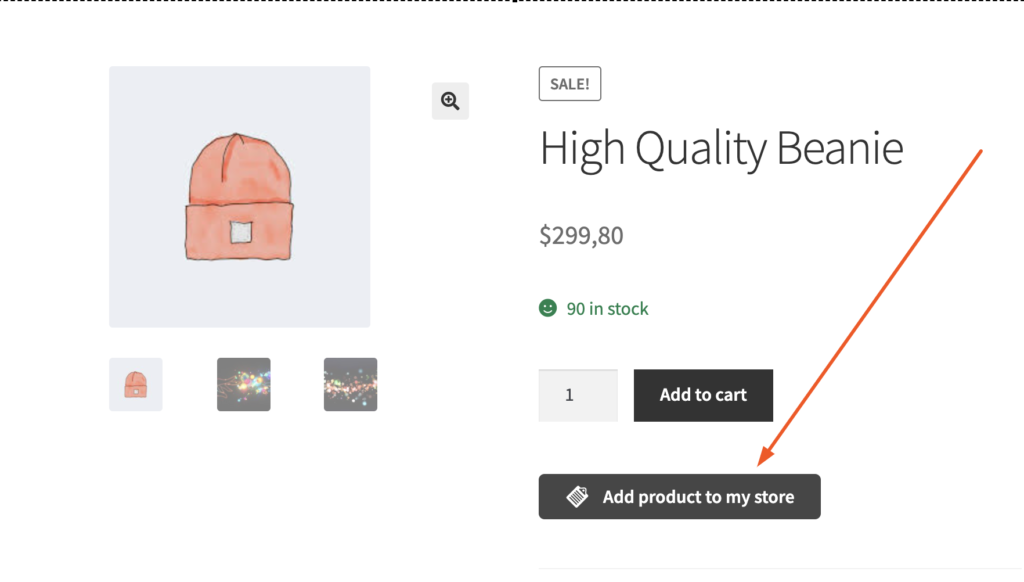
After clicking it, vendors will find the same product in their own store.
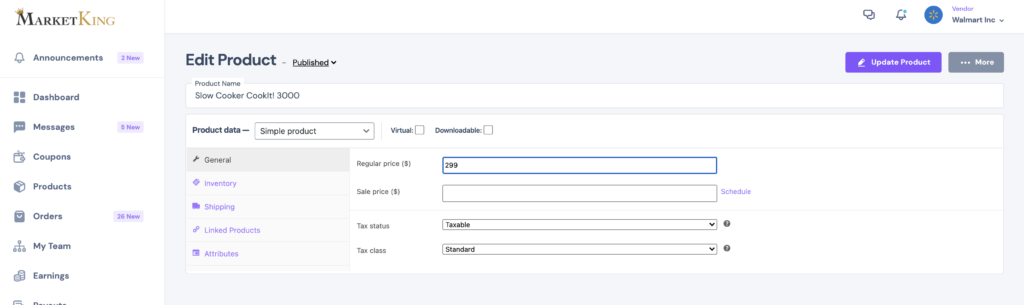
Vendors can fully modify and customize a product after adding it to their own store. They can go to their vendor dashboard and edit the item using the full range of MarketKing's frontend product management tools.
Backend Management
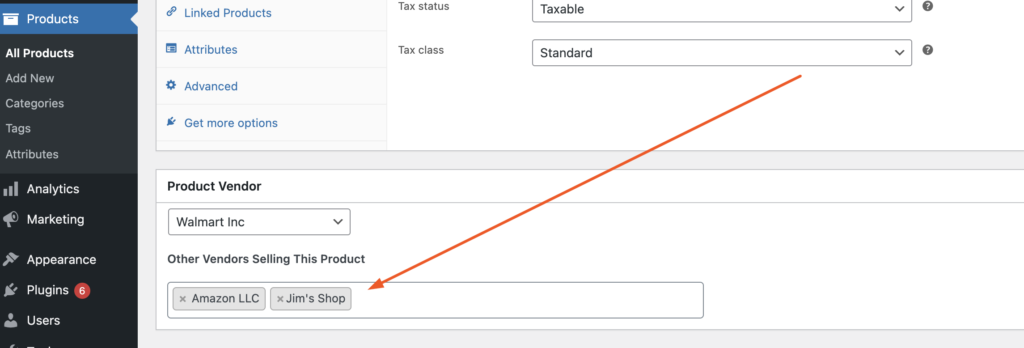
In the site backend, the admin can view which other vendors are selling the same item on each product's page. The admin can also easily remove or add vendors from here. If a vendor is added, that vendor will find the product in their store. If a vendor is removed, the product will be removed from that vendor's store.
Module Settings
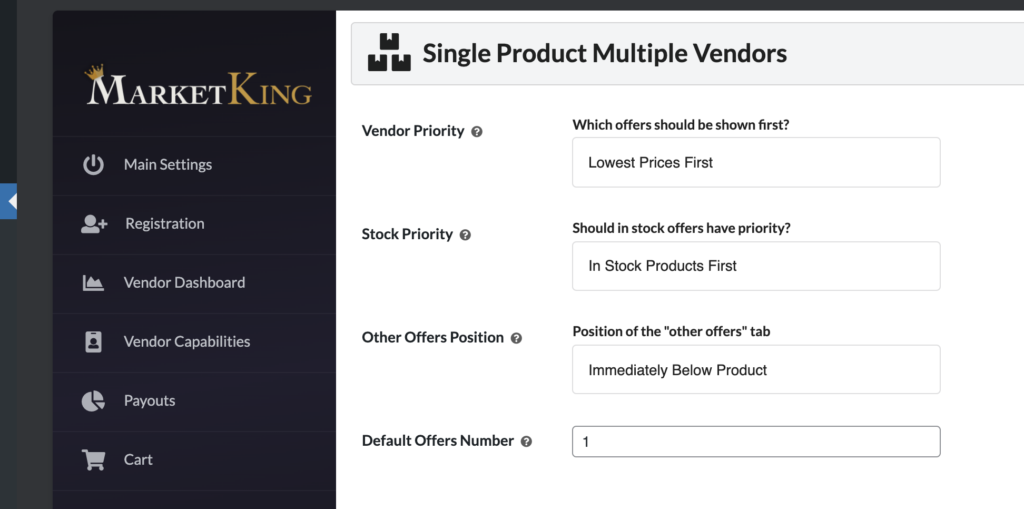
When this module is enabled, you can find a dedicated settings panel in MarketKing -> Settings -> Multiple Product Vendors:
Default Offers Number Setting
This setting controls how many offers are visible by default when the page loads, before the "show more" button is clicked. By default, this is set to 1.
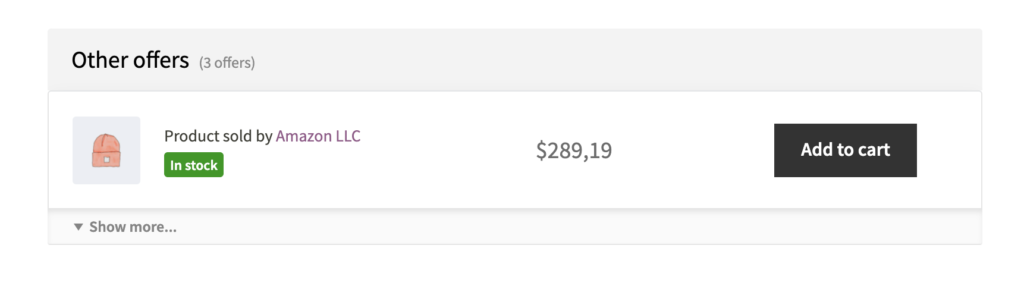
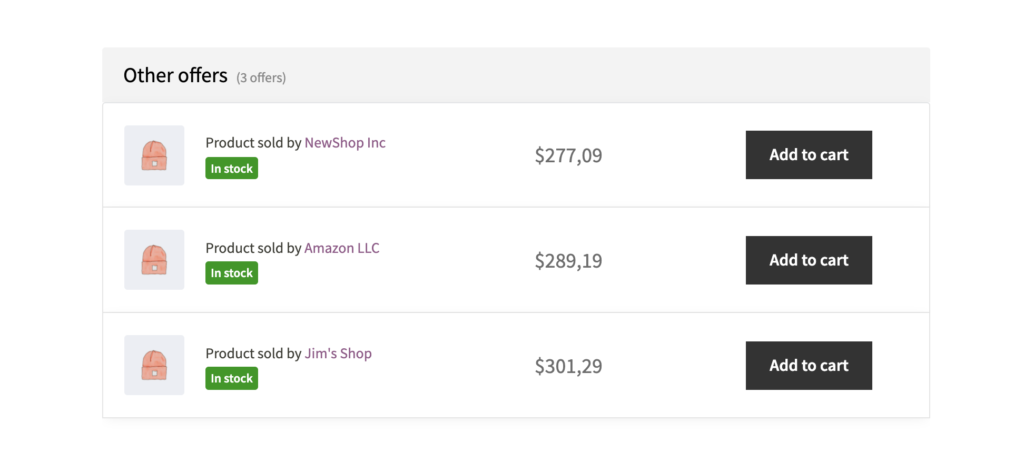
For example, if you set it to 2, you will see 2 offers visible by default:
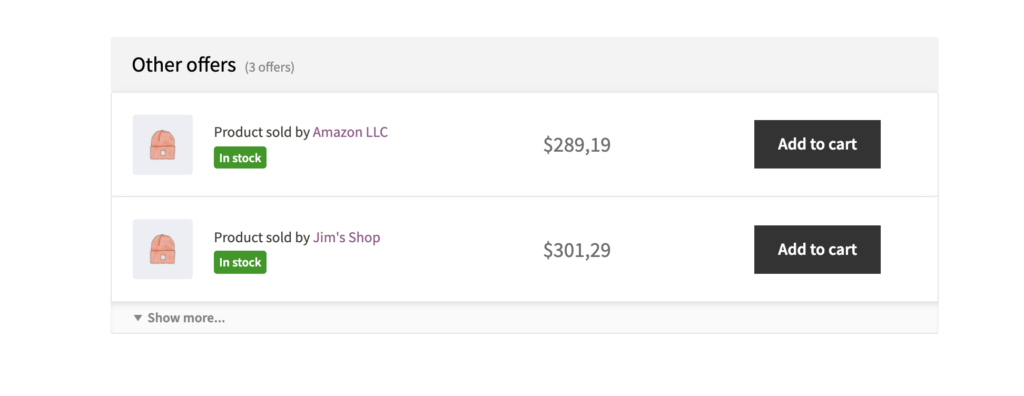
If you want to show all offers by default (and never have the "show more" button), you can enter a very high number here, such as 1000.
"Other Offers" Position Setting
This setting controls where on the product page the other offers panel is displayed.
There are 3 available options for this setting:
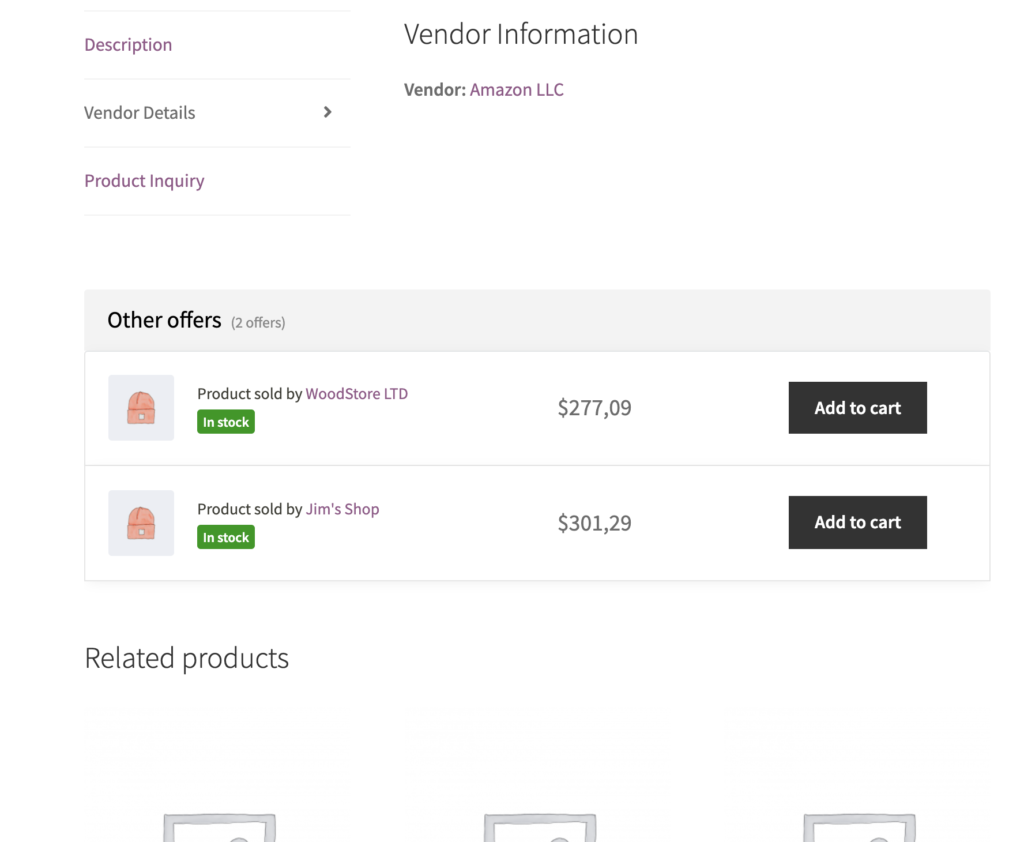
-> Immediately Below Product: This is the default option and shows offers right below the product, above product tabs such as "Description".
-> Inside Product Tabs: This shows offers in a dedicated tab. Whether this is a good design choice will depend on the theme.
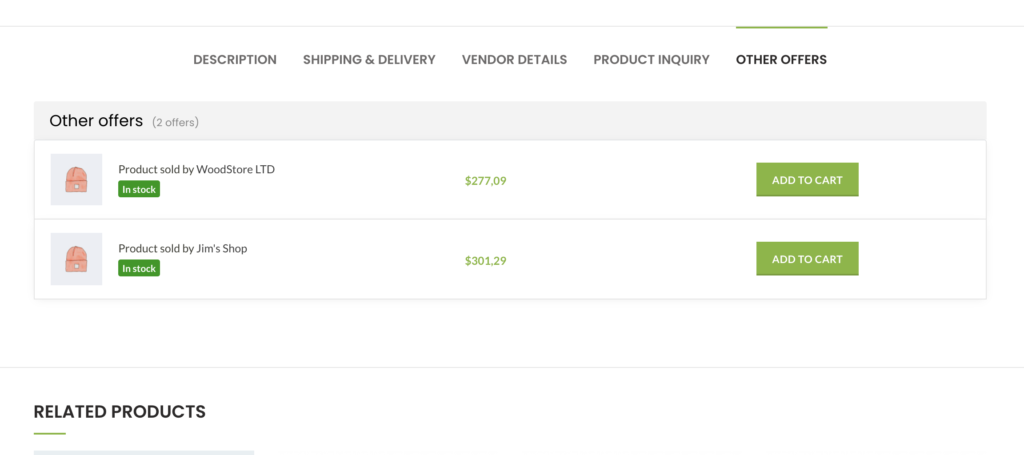
-> Below Product Tabs: This shows offers below the product tabs, above "Related Products".
Vendor Priority Setting
When multiple vendors are selling the same product, this setting controls which vendor's offer is displayed first. The available options are:
- Lowest Prices First: Sorts offers by price, with the lowest price first.
- Highest Prices First: Sorts offers by price, with the highest price first.
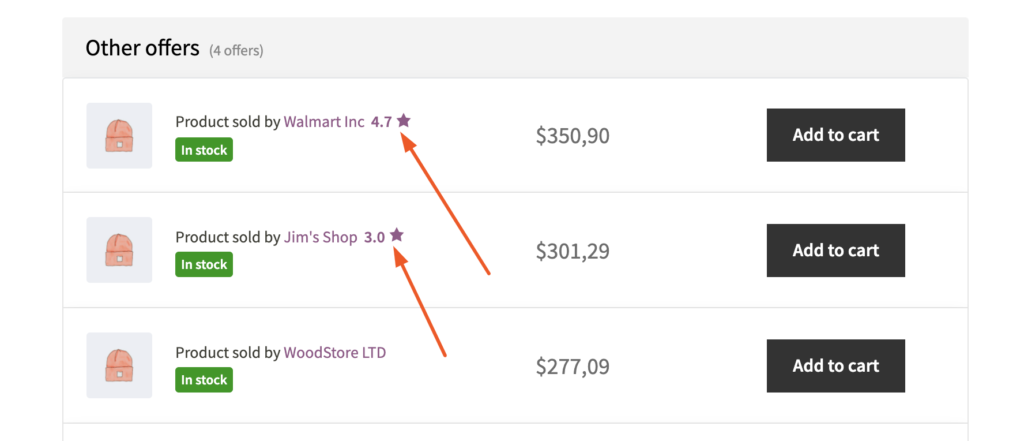
- Top Rated Vendors First: Sorts offers by vendor rating, with the highest-rated vendors first.
Stock Priority Setting
There are 2 available options:
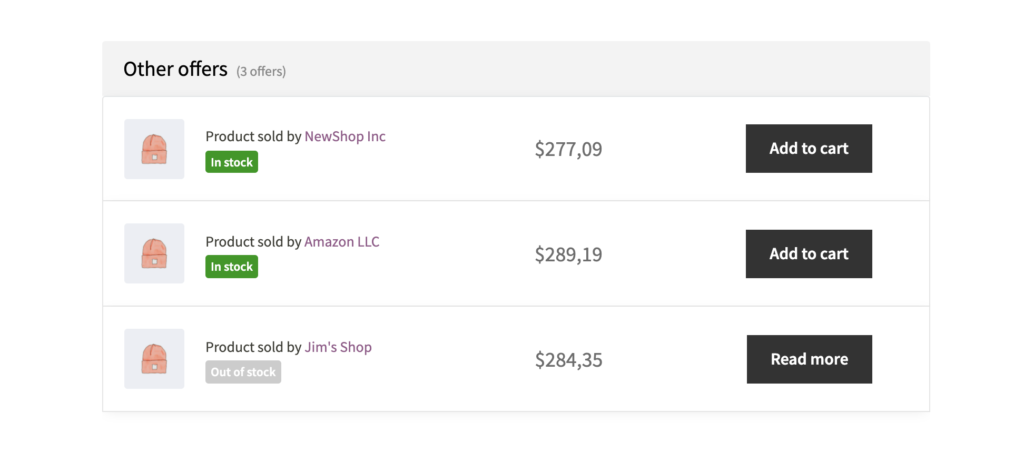
- In Stock - In-stock products are shown first; out-of-stock products are shown last.
- None - No sorting is done based on stock status.
The stock priority setting gives you the option to show in-stock products first. This option is applied before vendor priority.
For example: Let's say vendor priority is set to lowest prices first, and stock priority is set to in stock. Walmart's $199 offer will be shown first because it's the lowest price. But if Walmart's product goes out of stock, the plugin will no longer show it first. Instead, it will show the next best price: Amazon's $219 offer.
Which products are shown on shop / category / archive pages?
MarketKing does not show duplicate products on shop pages. It only shows a single product: the one with the highest priority (based on the settings described above for lowest price, highest price, in stock, etc.). So if 20 vendors sell the same product, that product will only appear once on shop pages.
MarketKing handles this automatically and seamlessly by constantly calculating and updating a product visibility cache, always knowing which offer to display first.
For example, if you set "stock priority" to "in stock" and the top-priority product is purchased and goes out of stock, the plugin immediately recalculates the priority for that specific product. The out-of-stock offer is no longer shown first (and no longer appears on shop / category pages). Instead, the next best offer that's still in stock is displayed.