Trust is an important component in any marketplace, but particularly so in marketplaces that deal with physical products or services (as opposed to digital products), since these cannot be verified directly by the marketplace team.
There are several features and workflows in MarketKing that can be used to maintain trust in the marketplace:
Escrow
With most payment gateways in MarketKing (except Adaptive gateways), payments work by having the funds collected by the admin/marketplace rather than by the vendor directly. Only at a later time, depending on the marketplace's policies, are these funds forwarded to the vendor. This acts as a built-in escrow feature, where the marketplace is the trusted third party that can control funds, oversee transactions, and mediate disputes between vendors and customers.
Order Status Control
An important feature that can help with this is order status control by vendor.
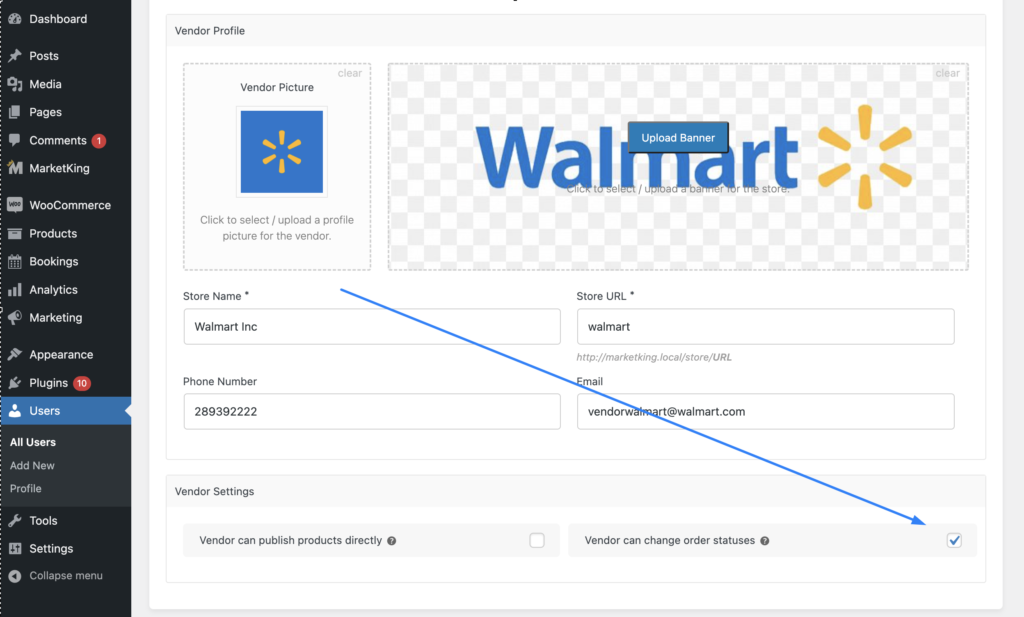
In MarketKing, funds are released to the vendor balance (not physically paid out) when the order status is marked as completed. You can configure for each vendor whether they are allowed to change the order status for their own orders (thus finalizing the order).
Workflow example:
- The admin can disable "Vendors Change Order Status" in MarketKing -> Settings -> Vendor Capabilities. This is a global setting, but it can also be set for each vendor individually.
- For a vendor's first orders, the admin can choose to manually oversee the orders and confirm with customers that they received the products in good condition. After confirming with customers, the marketplace manager marks the order as completed, thus releasing the funds into the vendor balance.
- After 100 orders, if the manager decides the vendor is sufficiently trustworthy, they can allow that vendor to control order status themselves. The manager can move the vendor from the "New Vendors" group to the "Trusted Vendors" group.
Vendor Security Deposit / Bail
Since the marketplace collects funds before they are released to vendors, it's possible for the marketplace manager to hold a security deposit (e.g. in case the vendor fails to deliver, provides fake products, etc.).

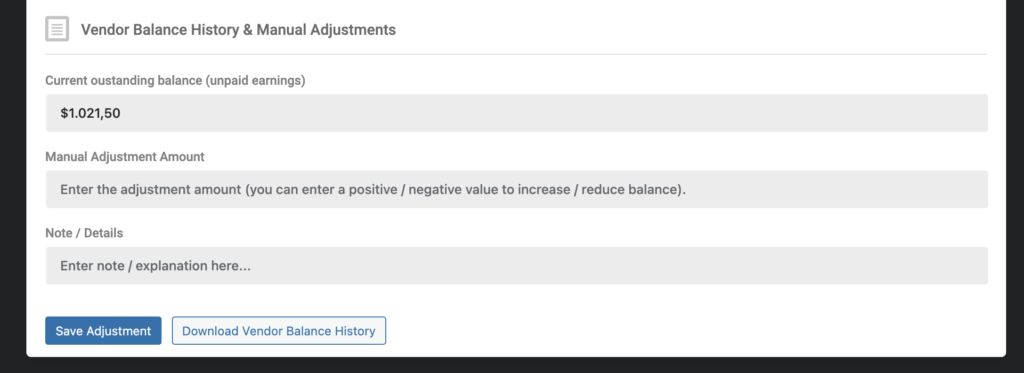
For example, the first $1000 sold by the vendor can be held as a deposit and only released at a later time (e.g. a year later) once the vendor has proven to be trustworthy. This can be achieved in MarketKing by making manual balance adjustments in the vendor balance history (in MarketKing -> Payouts):
Workflow example:
- When a vendor first joins the site, they are placed in the "New Vendors" group.
- After several orders, when the vendor balance reaches $1000, the admin makes a manual adjustment in the vendor balance, reducing it to 0 and marking the $1000 as a security deposit.
- After 6 months without negative incidents, the vendor is moved to the "Tested Vendors" group and the deposit is released. This is done by going to MarketKing -> Payouts and making another manual adjustment to increase the vendor balance.
Store Reviews
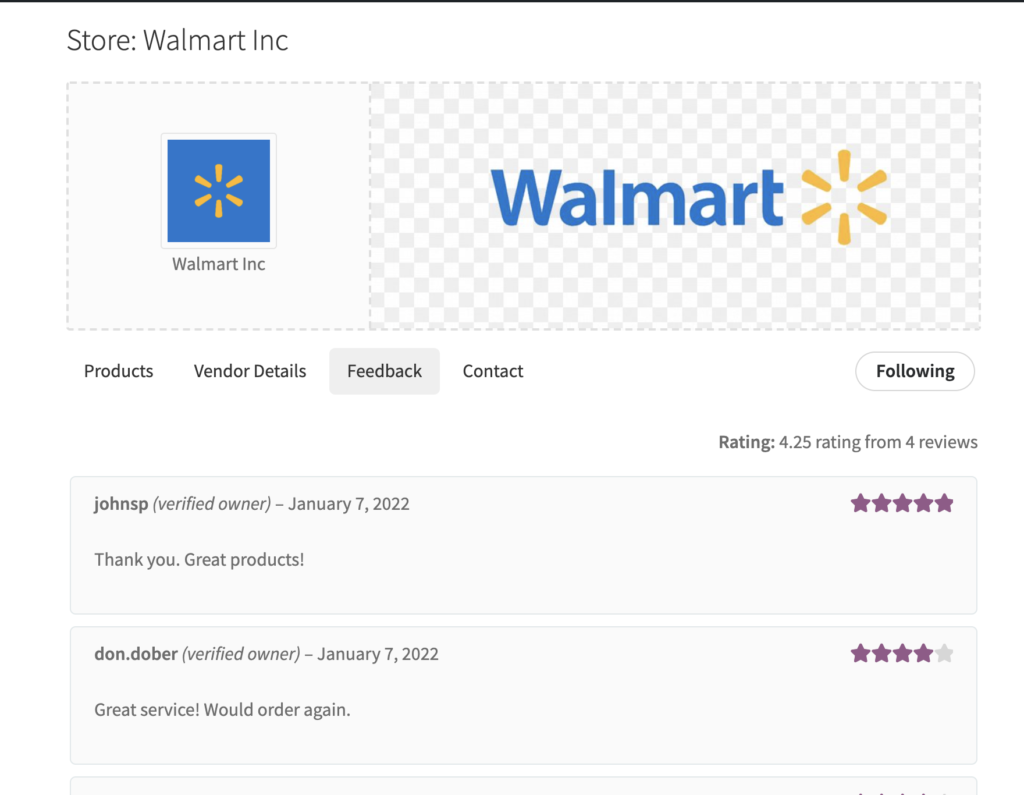
Another important system that helps ensure trust is the reviews module. Customers can leave reviews, and vendors have an average review score that is displayed on their product and store pages.
Vendors have a strong financial incentive to provide good products and services and collect positive reviews, which in turn improve sales. A vendor who provides low-quality products will quickly receive a low rating score and lose almost all business.